Podcast - 14 Abr 2026
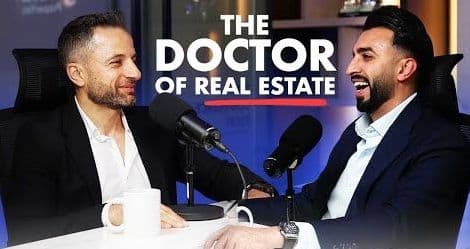
Farooq Syed Reveals His Exact Real Estate Sales System – Step by Step


Dubai broker Farooq Syed reveals his 8-step real estate sales and CRM system for predictable deals, stronger follow-up, referrals, and social media leads.
Description
Why You Need a Real Estate Sales System (Not Just “More Leads”)
Most agents blame luck, the market, or “bad leads” for weak results. Farooq Syed doesn’t buy that.
Running Springfield with 140+ Dubai real estate agents, he sees the same pattern: when we treat sales as a methodical real estate sales system instead of random hustle, deals become predictable.
In this episode, Farooq breaks down his exact framework:
- How he thinks about real estate sales systems and CRM in practice
- The 8‑step sales process he drills into his team
- The real estate prospecting strategies he uses daily (gym, school, golf, religion, community)
- Real estate follow up techniques that turn “dead” leads into full floors sold
- How social media, referrals, and negotiation fit into one controllable system
We’ll walk through those steps and show how they translate into a real estate lead management system you can actually run every day.
The Foundation: Conversations, Not Just Content or “Luck”
Farooq’s starting point is brutally simple:
“If you’re not having enough conversations with clients… you’re not going to be successful.”
A real estate sales system, in his view, is everything that:
- Creates conversations (prospecting and marketing)
- Structures those conversations (presentation, negotiation)
- Tracks and multiplies them (CRM, follow‑up, referrals)
He sees three big delusions that kill performance:
-
“I’ll post 10–15 videos and clients will just appear.”
Social media is real estate sales software for your brand, but it takes time. Like the gym, you don’t get an eight‑pack in a month. -
“If I just get more new leads, I’ll sell more.”
Agents demand fresh leads instead of working their database, expired leads, and past clients. Every old lead is someone who once had affordability. -
“Some agents are just lucky.”
He’s adamant: when we follow the eight steps consistently, “results will follow.” When we don’t, we call it luck.
Step 1: Prospecting – Always On, Everywhere
In Farooq’s real estate sales system, prospecting never stops. It’s the first, and arguably most important, stage in the pipeline.
He wants agents to treat prospecting as an integrated real estate lead generation engine made of multiple channels:
1. Social Media as Your Always‑On Prospecting App
Farooq treats Instagram and TikTok like a real estate sales app running 24/7:
- He’s never paid influencers for collaborations; he built everything on consistent content.
- Agents in his office with 500 followers have closed 10M AED deals from old school friends.
- One of his biggest penthouse deals came from a 60‑year‑old client whose teenage son saw Farooq on TikTok.
Key principles:
- Consistency beats collabs. Collabs help, but only if we already show up regularly.
- Omnipresence matters. Post the same video everywhere:
TikTok, Instagram Reels, Facebook, LinkedIn, YouTube Shorts.
A clip might flop on Instagram and blow up on Facebook, or vice versa. - Instagram DMs are gold. Most of his serious social leads “start with a DM”; it’s casual and low‑friction.
If we think like a real estate CRM system, social content is simply our automated top‑of‑funnel — constantly feeding people into our pipeline.
2. Networking as a Real‑World Lead Management System
Farooq’s real estate prospecting strategies are surprisingly simple and human:
- Community events (not only real estate ones)
- Religious gatherings – mosque, church, temple
- Kids’ school events – he only realized the power when he finally attended a father’s day at school and saw multiple Cullinans outside
- Supercar clubs – if that’s your natural crowd
- The gym – one trainer referral turned into a 300M AED portfolio; another gym acquaintance just bought a Cherrywoods villa
He calls this “friendship farming”:
“You become friends, not necessarily buyers… they could be connectors.”
And he pays referral fees (10–25% of gross commission) to anyone who sends real business, from personal trainers to respected community figures. That keeps our real estate referrals channel alive.
3. Agent‑to‑Agent Networking
For secondary market deals, he still relies heavily on:
- Relationships with other Dubai real estate agents
- Agents who “share owners and properties in a heartbeat”
If you sell resale stock, agent networks are part of your real estate broker CRM software, even if they’re not in your actual app.
Step 2: First Contact – How You Approach People
Farooq separates prospecting (finding people) from approach (how you actually start the conversation).
In person (networking, gym, golf), his approach is ultra‑low pressure:
- Say hi, smile
- Share equipment, exchange small talk
- Let relationships build over months, not minutes
On WhatsApp and phone:
- Start light: a couple of images and a price range, not six giant brochures.
- Always end every message with a question so the conversation continues.
- Don’t bombard; avoid giving the client a reason to say, “I’ll review and get back to you” (code for “I’ll never open this”).
He sees WhatsApp as part of a real estate customer management system:
- Use it to share basic info and visuals
- Then get on a call (or in‑person meeting) to really sell
- For international clients, he has closed purely on WhatsApp when the launch is hot and the client already understands the project — but that’s the exception.
Step 3: Presentation – Two‑Way, Not a Monologue
Most agents equate “I’m good at presenting” with being good at sales. Farooq disagrees.
“We’ve seen agents give a 30‑minute perfect presentation… then the client says, ‘Thank you, I’ll think about it.’ That’s the worst way.”
For him, effective real estate sales training on presentation focuses on:
-
Questions, not speeches.
Continually ask:- “Is this important to you?”
- “Does this make sense?”
- “Do you like this view / layout / community?”
-
Finding fit, not selling features.
His top performers aren’t flashy presenters; they’re excellent at understanding what the client wants and matching the right property.
A good real estate sales system here looks like:
- A property sales CRM that lets you quickly filter inventory by exact needs (view, size, floor, budget)
- Being able to compare options and build a shortlist on the spot
- Having enough project knowledge to talk about things not in the brochure (past transactions, nearby rents, yields)
Farooq likes using analytics and graphs to stand out in presentations and WhatsApp:
- Compare developer prices to nearby ready stock
- Show expected yields as a simple chart
- Use data from tools (like Realist or portal stats) in real time
Even simple graphs instantly distinguish us from 50,000 other agents sending the same brochure.
Step 4: Follow‑Up – Discipline, CRM, and Creativity
Farooq is blunt: follow‑up is where “most agents lack discipline.”
We do the hard part — prospecting + approach + presentation — then:
- Client needs to talk to spouse / bank / family
- We accept it, go chase new leads
- We never follow up properly and lose the sale
He treats follow‑up as the beating heart of a real estate lead management system:
Use Your CRM System Like Your Memory
In Springfield, it’s mandatory that agents:
- Log every call, meeting, and small personal detail in the CRM:
- Daughter’s wedding date
- Son coming back from the US
- Timing of a business sale
If the client said, “Call me after my daughter’s wedding in three months” and we don’t, we’ve wasted all earlier work.
“A good CRM can make or break the sale.”
This is real estate sales software in its purest form: not fancy, just disciplined logging and reminders.
Creative Follow‑Up Scripts That Actually Get Replies
Farooq and the host shared several powerful real estate follow up techniques:
-
“I’m going to a project presentation right now…”
- Before any developer presentation, message 5–20 clients:
- “Hey Mr. Mohammed, I’m heading to a new project presentation in Dubai Hills that might fit your criteria. I’ll update you afterward.”
- After:
- “Just finished. It’s actually not ideal for your profile because [reason]. I’ll keep hunting.”
- or “It’s very strong for you — want me to send details?”
This:
- Shows you’re actively working for them
- Builds anticipation
- Works even when you already know the project may not fit
- Before any developer presentation, message 5–20 clients:
-
“I’m not sure if it’s for you, but take a look…”
- If a client is fixated on, say, Creek Harbour and you spot a great off‑area deal:
- “I’m not sure if it’s for you, but take a look at this. You told me Creek only, so no pressure — I just don’t want you to miss this opportunity.”
That softens resistance and opens new options without feeling pushy.
- If a client is fixated on, say, Creek Harbour and you spot a great off‑area deal:
-
Assume there are no new clients left.
Imagine:- “From now on, I will never receive a new lead again. My only business is my current database.”
That mindset makes you obsess over existing clients and referrals, raising your level of care and frequency of contact.
- “From now on, I will never receive a new lead again. My only business is my current database.”
-
Update even when “nothing happened.”
- If a developer still hasn’t responded:
- Proactively message: “No update yet; I’ll chase them again this afternoon.”
- Don’t wait for the client to ask “Any update?” — that erodes trust.
- If a developer still hasn’t responded:
Farooq sees social media as another follow‑up channel:
- He had been in real estate 7–10 years before starting content
- He got past clients onto his Instagram so they’d keep seeing his work
- Years later, clients call and reference his posts about travels, family, and deals — it keeps the relationship warm without manual outreach.
Step 5: Negotiation & Closing – Create Real Urgency, Not Fake Promises
The negotiation / closing stage is where a lot of agents lose deals with one sentence.
Common mistakes he sees:
- Over‑promising discounts from developers who absolutely won’t give them
- Creating expectations we can’t meet, leading to disappointment and distrust
- Failing to create any real urgency
In his real estate negotiation tips, Farooq emphasizes:
1. Don’t Promise What You Can’t Deliver
If you know a developer never discounts:
- Don’t say, “Yes, I’ll get you a discount.”
- Saying “maybe” to please the client now can kill the deal later.
2. Create Urgency Around the Right Thing
In strong markets, launches may genuinely sell out fast. But even when there’s healthy availability, you can ethically create urgency around specific units, not fake scarcity:
-
Hone in on the exact stack / series that fits:
- Right view
- Acceptable floor
- Within budget
-
Example script:
- “You’re really drawn to the 03 line. On high floors, there are only two 03s above level 20. It’s fine if you take a week to think, but I’m worried that exact unit will be gone. Next time you may have to settle for below floor 10.”
That’s not lying; it’s focusing on the most desirable configuration.
He illustrates the psychology with a real‑world story:
- At Cartier, his wife wanted a bracelet.
- Saleswoman says: “We have one piece left in your size.”
- He knows Cartier isn’t running out, but:
- The urgency pushed the decision over the line.
- Buyers come to us because they want to buy — part of our job is to help them commit.
3. Understand What Actually Triggered the “Yes”
After each deal, Farooq reflects:
- What exactly made them finally say yes?
- What were they holding back on before that moment?
That feedback loop is how a real estate sales management system improves over time — not just software, but our mental models and scripts.
Step 6: Post‑Close – Don’t Leave Money on the Table
Most agents celebrate the moment the SPA is signed and move on. Farooq calls this a huge mistake.
He shares a painful office example:
- Agent A gets a lead, closes a 2–2.5M AED unit
- Doesn’t build a pipeline in the CRM after the sale; the lead auto‑reshuffles
- Agent B picks it up, discovers:
- Client has already bought several units elsewhere
- Agent B offers full floors in a new project
- A week later, closes an entire floor with the same client
Agent A was celebrating a 2.5M deal while tens of millions sat on the table.
Lesson: a proper real estate customer management system doesn’t end at “deal closed.”
Post‑close, we should:
- Keep logging interactions in the CRM
- Proactively talk about:
- Future launches that match the client’s strategy
- Portfolio planning (upgrades, diversification)
And crucially:
- Recognize that in Dubai especially, many inbound clients are “heavy hitters” buying multiple units and floors, not just one apartment.
Step 7: Referrals – Script It, Don’t “Hope for It”
Farooq admits he used to be a strong closer but terrible at asking for referrals. He’d close and immediately chase the next stranger.
Today he treats referrals like a core module of his real estate sales system.
His Referral Script (Step by Step)
-
Set expectations at the very beginning of the relationship:
- During the first viewing or call:
“My business works purely on commission; I don’t have a salary. If you’re happy with my service, I’d really appreciate it if you could refer me to 5–6 of your friends afterward.”
That implants the idea early.
- During the first viewing or call:
-
After a successful closing & good service:
- He circles back:
“Mr. John, remember when we started, I said I work on commissions and asked you to keep me in mind for any referrals. Even if your friends aren’t buying right now, could you connect me with 10 people you trust? I’ll take great care of them.”
He’s realistic: those 10 may not be hot buyers today, but each introduction is warmer than any portal lead.
- He circles back:
He values one solid referral more than 10–20 portal leads because trust is pre‑installed.
Paying Referral Fees
He typically pays 10–25% of gross commission depending on:
- How involved the referrer is (just an intro vs. actively influencing the decision)
- The size and quality of business
- Whether it’s a one‑off or recurring referral partner
He even has wealthy clients who’ve effectively become informal “agents” for him because:
- The referral fees are meaningful
- They enjoy connecting their network
One important nuance: he and the host both warn against exposing your full commission to end clients. A simple, fixed “1% of purchase price if your friend buys” is often safer than “20% of my commission” — both protect our margins and avoid awkwardness when clients see we make 6% on some projects.
Step 8: Long‑Term Relationship Management – Your Real Estate CRM in Action
The final step in Farooq’s real estate selling system is maintaining positive long‑term relationships.
This is where true real estate CRM software shines, but behavior matters more than tools.
Simple, Powerful Habits
-
Holiday + festival messages
- Eid, Christmas, Diwali, New Year — he used to think these generic “Eid Mubarak” blasts were pointless, until he saw:
- His own father choose an agent in Pakistan purely because:
“He never missed Eid messages for years.”
- His own father choose an agent in Pakistan purely because:
- Now he respects their compounding effect.
- Eid, Christmas, Diwali, New Year — he used to think these generic “Eid Mubarak” blasts were pointless, until he saw:
-
Small, thoughtful gifts
- For 20–30 key clients:
- A 30–40 AED box of Ferrero Rocher before Eid / Christmas / Diwali
- Personally delivered to their office with a quick catch‑up:
- Review portfolio
- Softly ask about new opportunities or referrals
Clients don’t care about price — they care that we remembered.
- For 20–30 key clients:
-
Constant updates on work they never see
We often do hours of behind‑the‑scenes work (chasing developers, resending SPAs, clarifying handover details) that clients never know about. Result: they undervalue us.Fix it by narrating your actions:
- “Heading to the developer now to unblock your SPA.”
- “Just followed up again; their signatory is out of town; they expect it next week.”
- Even: “No update yet; I’ll call again this afternoon.”
One of his agents had an “angry client” purely because nobody had updated him on SPA delays — a couple of proactive messages instantly restored goodwill.
Social Media as Long‑Term CRM
Farooq leverages social media as a lightweight, always‑on relationship layer:
- Ensures all past and current clients follow him
- Posts deals, travels, family moments, market updates
- Years later, clients call, referencing:
- “I’ve been following you, congrats on X, your son’s grown so much…”
We stay top‑of‑mind without manual 1‑1 outreach — exactly what a good real estate customer management system is supposed to do.
How Social Media Fits Into the Sales System
Farooq runs what is essentially a social‑media‑first real estate sales system for Dubai real estate agents.
Key ideas:
1. Omni‑Channel Presence
He insists new agents:
- Shoot one video per day
- Upload it to:
- TikTok
- YouTube Shorts
The hard work is recording; distribution is easy. Different platforms amplify different content.
2. 60‑Day Content Challenge
Inside Springfield, he runs a 60‑day challenge:
- Each agent signs a physical commitment:
- “I will post 60 pieces of content in 60 days across all platforms.”
- He signs as a witness.
This:
- Triggers panic (“What the hell do I post?”)
- Forces agents to:
- Study projects
- Follow top creators
- Learn the market to avoid sounding clueless on camera
Content sources:
- Other real estate creators in Dubai
- New city initiatives (airports, infrastructure, visas)
- Launches, cancellations, market stats
3. Balance: Professional vs Entertaining
A guest asked: should we be serious and boring, or entertaining?
Farooq’s answer: both.
- Purely “professor” accounts with 200 followers are useless
- Pure meme / dance accounts may get reach but not credibility
He recommends:
- Use entertaining content to attract and grow (relatable, human, fun)
- Use professional content (analysis, projects, data, negotiation tips) to convert and retain
Or in SEO terms: we need both audience growth and conversion content in our real estate social media marketing.
WhatsApp & Email in the System: How Often, How Much?
On WhatsApp:
- Start with minimal info (1–2 images + price starting from X).
- Let the client respond, then tailor.
- Always end each interaction with a question.
- Avoid dropping 50MB brochures, payment plans, fact sheets and then hearing “I’ll review.”
On email:
- Farooq notes that global email rules are tightening and bulk email marketing is getting harder. He sees email performance declining.
The host’s nuance:
- For US/Canadian clients, email is still crucial; culturally many prefer detailed email recaps.
- It’s cheap; with AI we can draft quickly.
- Best used as:
- Periodic market snapshots (once a week or month):
- What launched
- What sold
- Brief commentary
- Not as generic “New launch from 900K, call me” spam.
- Periodic market snapshots (once a week or month):
Think of email as:
- A secondary channel in your real estate business management software stack
- Great for longer‑form, archive‑friendly communication
- Not your primary real estate lead generation engine in GCC markets
Prospecting Scripts for Gym, Golf, and High‑Net‑Worth Circles
Farooq’s real estate prospecting strategies are hyper‑practical, especially in Dubai’s HNWI environment:
In the Gym
- Start with:
- “Can I work in with you?”
- “How long more on this machine?”
- Build rapport over months, not minutes.
- At some point:
- “What do you do?” → “I’m in real estate.”
- Always be friendly to staff:
- One trainer referral became a 300M AED client.
He always pays trainers and connectors well; otherwise, the referral pipeline dies.
On the Golf Course
For agents who play golf:
- It’s a natural place for long conversations with affluent people.
- If you’ve been away for a year and want to “re‑introduce” yourself as an agent:
- Farooq suggests starting with social media:
- “Hey, I’ve started a new real estate page, would love your follow.”
- The host suggests a more direct angle:
- Come with a specific, “too good to be true” sounding deal:
“I have an off‑market villa 40% under market on the golf course. Not sure if it’s for you, but maybe someone in your network is looking.”
- They now know you’re in real estate; you’ve honored their status by offering access to a special opportunity.
- Come with a specific, “too good to be true” sounding deal:
- Farooq suggests starting with social media:
Both angles avoid the awkward, “Hey, I’m an agent now, got anyone who wants to buy?”
Time Management: Running a Team, Brand, and Clients
Asked how he manages:
- 140+ Springfield agents
- His own VIP clients
- Daily social content
- Developer relationships
- Events & trainings
Farooq’s answer is non‑technical but critical for any real estate agent CRM software to be useful:
-
Strict daily routines:
- Sleep and wake at the same time, even on weekends
- Start the day with the gym
- Show up at the office at the same time every day — like clockwork
-
Calendar discipline:
- Every hour is scheduled: operations, HR, marketing, accounts, developer meetings, trainings, networking
- Leaves some white space, but not much
He notes that most agents simply don’t show up on time because:
- No one is looking over their shoulder
- They’ve closed a few deals and get lazy
Without that consistency, even the best real estate CRM system won’t save performance.
Pulling It Together: Farooq’s 8‑Step Real Estate Sales System
Let’s consolidate his framework as a full real estate sales management system you can adopt:
-
Prospecting
- Social media (omni‑channel content, DMs)
- Community, religion, kids’ school, gym, car clubs
- Agent‑to‑agent networks
- Always be meeting people and expanding the top of the funnel.
-
Approach & First Contact
- Low‑pressure introductions in person
- Light, conversational WhatsApp + quick calls
- Always end communications with a question.
-
Qualification & Presentation
- Ask more than you talk
- Use data, comparisons, and graphs
- Match exact needs using your real estate CRM system and inventory filters.
-
Follow‑Up
- Log everything in your CRM (calls, kids, weddings, timelines)
- Use creative scripts (“I’m heading to a presentation…”, “I’m not sure if it’s for you…”)
- Update proactively, even when nothing has changed.
-
Negotiation & Closing
- Don’t overpromise discounts or terms
- Build ethical urgency around specific units
- Understand what really triggered the “yes.”
-
Post‑Close Expansion
- Assume there’s more business behind every client
- Offer floors, portfolios, future launches
- Never treat a closed deal as “finished” in the CRM.
-
Referrals
- Seed the idea from day one
- Use a clear ask after closing (“connect me with 10 people”)
- Pay referral fees (10–25% of gross) and structure them smartly.
-
Long‑Term Relationship Management
- Holiday messages, small gifts, office visits
- Social media for continuous light contact
- Treat your database like your only future business.
Run these eight steps consistently, and your “luck” will improve dramatically.
In the end, Farooq’s real estate sales system isn’t about fancy tech. CRM, apps, and software matter — but only as tools to support what he keeps repeating:
- Conversations, discipline, and genuine care.
- Methodical prospecting, real estate prospecting strategies that fit your life.
- Relentless follow‑up and long‑term relationships.
When we stack those together, we don’t just become better Dubai real estate agents; we build a real estate business that compounds every year.